Dreaming about a home with a little breathing room in Botetourt County? Buying land or small acreage can open up a lot of possibilities, but it also comes with more moving parts than buying a typical house lot. If you want to avoid surprises, you need to know how zoning, access, utilities, and local approvals shape what you can actually do with a parcel. Let’s dive in.
Why Botetourt land takes extra homework
Botetourt County’s land policies are shaped by long-term rural preservation goals and the current Envision Botetourt 2045 planning update. In practical terms, that means land is not all the same, even when two properties look similar online.
A parcel’s size tells only part of the story. What matters just as much is how the land is zoned, whether it has legal access, what utility options exist, and whether any overlay district or easement limits future use.
Common parcel types in Botetourt County
If you are buying land in Botetourt County, you will usually be comparing one of four broad parcel types. Each one fits a different goal and buyer profile.
Agricultural and open-space tracts
These parcels often align with the county’s preservation-focused land-use program. They may appeal to you if you want space for farming, animals, or a lower-intensity rural use.
If that is your plan, it is smart to look beyond the listing remarks. You will want to confirm zoning, actual use, access, and any restrictions before assuming the property fits your long-term vision.
Rural residential acreage
This is often the best fit if you want a homesite with more land than a typical neighborhood lot. Botetourt’s zoning framework includes a rural-residential category for this kind of property.
For many buyers, this is the sweet spot. You may get room to spread out without taking on the complexity of a large farm or heavily restricted conservation tract.
Forest-conservation land
The FC district is intended to preserve ridges, valleys, and forest land. It is generally not meant to be served by public water or wastewater, which makes it very different from a more conventional buildable lot.
By-right uses in this district can include agriculture, single-family dwellings, home occupations, and other low-intensity rural uses. Still, you should verify the specific parcel details early, especially if you hope to build soon or add improvements later.
Serviced buildable lots
At the other end of the spectrum are lots in higher-density residential districts, especially areas planned for growth that require public or community water and sewer. These properties may offer a more straightforward path if your priority is building with fewer rural infrastructure questions.
This is a very different experience from buying acreage with a private well and septic system. If convenience matters more than elbow room, this type of lot may be worth considering.
Start with zoning, not acreage
One of the biggest mistakes land buyers make is assuming that more acres means more freedom. In Botetourt County, acreage alone does not answer the use question.
The county recommends checking base zoning through GIS and the zoning office. A parcel may also have overlay rules or proffered conditions, so you need the full picture before making plans.
Ask these zoning questions early
Before you move forward, try to answer these questions:
- Is your intended use allowed by right?
- Would the parcel need a special exception permit?
- Would a rezoning be required?
- Are there overlay rules affecting the property?
- Are there proffered conditions or easements in place?
Botetourt’s Planning and Zoning office handles rezoning, special exception permits, subdivision approvals, variances, and appeals. That makes them a key part of your due diligence when you are evaluating vacant land.
Town rules may override county rules
This point is easy to miss. If the parcel is inside Buchanan, Fincastle, or Troutville, town rules control zoning, floodplain, and subdivision matters instead of county rules.
That means you should confirm which local government has authority before relying on county information. A property’s mailing address does not always tell you enough by itself.
Road access is a buildability issue
A beautiful parcel can still be a poor fit if access is not workable. In Botetourt County, structures that require a building permit generally must be on lots with frontage on a public road unless another rule applies.
That makes access one of the first things to check, not something to save for later. If road access does not work, your building plans may not work either.
Public road or private road?
Botetourt County says VDOT maintains the road system in the county, while private roads are not maintained by the county or the state. That difference can affect maintenance costs, access reliability, and future resale.
If the parcel is on a private road, ask whether there is a maintenance agreement in place. Also ask whether there is any realistic path for that road to be accepted into state maintenance in the future.
Entrance permits matter too
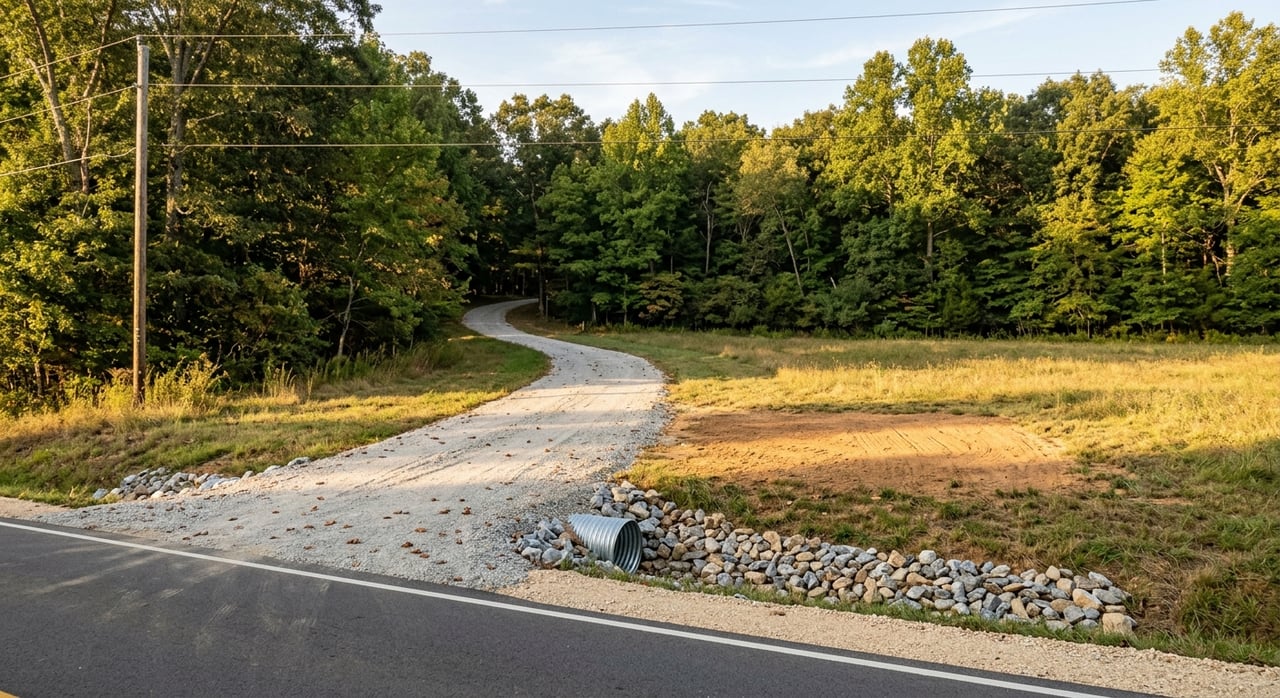
If entrance work will take place in VDOT right of way, a land-use permit is required and must meet access-management rules. This is another reason to research access early, especially for raw land.
A parcel may look simple on paper, but driveway and entrance approvals can shape what is practical on the ground.
Water, sewer, well, and septic
Utility planning is one of the biggest differences between buying acreage and buying a typical resale home. In Botetourt County, water and sewer service may come through the Western Virginia Water Authority, private water systems, or the towns of Buchanan, Fincastle, and Troutville.
Many acreage parcels, however, depend on a private well and septic system. That means your due diligence should include a clear plan for both water and wastewater service.
Separate health approvals from building approvals
For wells and septic systems, Botetourt residents work through the Roanoke Health District and the Virginia Department of Health. The county Health Department specifically notes that it does not handle building permits.
That distinction matters. Planning and zoning, health approvals, and building permits are related, but they are not the same step in the process.
Internet and utilities are parcel-specific
The county lists multiple possible providers for electric, gas, telephone, and internet service. Still, service availability should always be confirmed directly with the provider because coverage is parcel-specific.
This is especially important if you work from home, stream heavily, or plan to spend extended time on the property before building.
Floodplain and site constraints can change the plan
Not every usable-looking piece of land is equally easy to improve. Botetourt County participates in the National Flood Insurance Program and manages floodplain issues through its Floodplain Overlay District.
The county’s GIS and floodplain map tools are intended to help buyers check whether a parcel is in a flood zone. This is worth reviewing early because floodplain issues can affect building placement, permits, and overall project cost.
Land-disturbing permits are also required for commercial and subdivision projects, as well as projects disturbing more than 10,000 square feet. If your future plans include more than a simple homesite, this can become a major part of your timeline.
Easements and land-use tax status
Two parcels with similar size and price can have very different long-term flexibility. Conservation easements are one reason why.
Botetourt County notes that conservation easements can preserve land while still reserving certain rights, such as building a home, adding farm buildings, or continuing agriculture or forestry. Even so, an easement can materially limit future improvements, so it is best to review it early.
Understand land-use tax rules
The county’s land-use tax program is separate from zoning. It is based on actual use and minimum acreage thresholds, including 5 acres for agricultural use, 5 acres for horticultural use, 20 acres for forest use, and open space under written agreement.
Applications are due at least 60 days before the tax year, and reapplications are due by March 1 in reassessment years. If favorable tax treatment is part of your plan, confirm that the parcel and your intended use actually qualify.
Can you subdivide later?
Some buyers want a homesite now and future flexibility later. If that sounds like you, subdivision potential should be part of your early research rather than a future guess.
All land divisions in unincorporated Botetourt County are governed by Chapter 21. The county also requires final approval before a plat can be recorded, and plats must be prepared by a Virginia-licensed surveyor or professional engineer.
A surveyor often becomes essential
The county distinguishes among family subdivisions, boundary line adjustments, lot-line vacations, and larger subdivision cases. That means the path forward depends on what you are trying to do, not just how many acres you own.
If future division matters to you, a licensed surveyor can help you understand layout, frontage, boundary issues, and whether the concept is likely to work under current rules.
A smart order for due diligence
When you are serious about a parcel, the order of your research matters. Botetourt County’s own permit application asks about floodplain status, VDOT entrance permits, and water and sewer choices, which helps point buyers toward a practical review sequence.
A good starting order is:
- Confirm zoning and allowed uses
- Verify whether county or town rules apply
- Check road frontage and access
- Review water, sewer, well, or septic options
- Look at floodplain and overlay issues
- Review easements or proffered conditions
- Evaluate survey and subdivision potential
- Confirm permit pathways for your intended build
This process can save you time, money, and frustration. It also helps you compare parcels based on what you can actually do, not just on price per acre.
How a local guide helps
Buying land and small acreage in Botetourt County is rarely a one-page decision. You are evaluating not just the property, but the process needed to turn that property into a workable homesite or long-term investment.
That is where local, hands-on guidance matters. When you have the right support, you can ask better questions, spot red flags earlier, and move forward with more confidence.
If you are exploring land or small acreage in Botetourt County, Lisa Santacaterina can help you sort through parcel types, due diligence steps, and the local details that matter most.
FAQs
What should you check first when buying land in Botetourt County?
- Start with zoning, then confirm access, utility options, floodplain status, and any easements or overlay rules affecting the parcel.
Does acreage alone tell you whether land is buildable in Botetourt County?
- No. Buildability depends on zoning, road frontage or legal access, utility or septic options, floodplain issues, and permit compliance.
Who controls zoning if the land is in Buchanan, Fincastle, or Troutville?
- If the parcel is inside one of those towns, the town controls zoning, floodplain, and subdivision questions rather than Botetourt County.
Do Botetourt County land buyers need to check whether a road is public or private?
- Yes. VDOT maintains public roads in the county, while private roads are not maintained by the county or the state.
Can a Botetourt County parcel have restrictions even if zoning seems to allow your plan?
- Yes. Overlay rules, proffered conditions, conservation easements, and floodplain restrictions can all affect how a parcel may be used.
What are the land-use tax acreage thresholds in Botetourt County?
- The county lists 5 acres for agricultural use, 5 acres for horticultural use, 20 acres for forest use, and open space under written agreement.